En octobre, Crews s’engage activement aux côtés de la Ligue contre le Cancer #CrewsEnRose

👉 En savoir plus

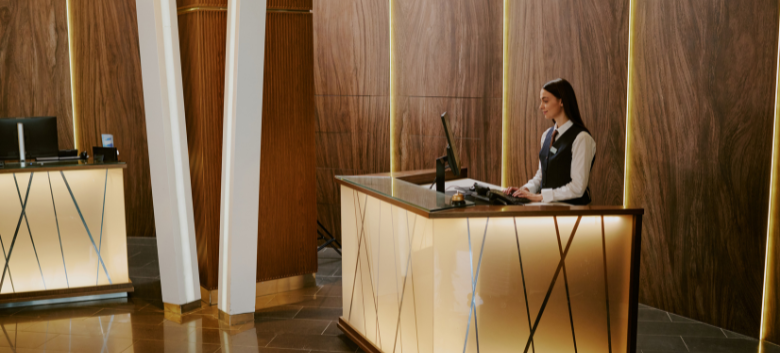
L’automatisation est en train de transformer en profondeur le secteur de l’hôtellerie. Face à des clients de plus en plus exigeants et à des équipes souvent sous pression, les établissements doivent trouver des moyens d’optimiser leurs opérations tout en maintenant un haut niveau de service.
Mais automatiser ne signifie pas tout robotiser. L’enjeu est ailleurs : gagner en efficacité sans déshumaniser l’expérience.
Quelles sont donc les meilleures pratiques pour intégrer intelligemment l’automatisation dans un hôtel ?
L’automatisation répond à plusieurs enjeux clés du secteur.
D’abord, un enjeu opérationnel. Les équipes hôtelières gèrent un grand nombre de tâches répétitives : confirmations de réservation, réponses aux demandes clients, gestion des disponibilités, suivi des interventions techniques… Automatiser ces actions permet de réduire la charge de travail et d’éviter les erreurs.
Ensuite, un enjeu d’expérience client. Les voyageurs attendent aujourd’hui des réponses rapides, disponibles 24/7. L’automatisation permet de répondre instantanément à certaines demandes, tout en améliorant la fluidité du parcours.
Enfin, un enjeu économique. En optimisant les processus, les hôtels peuvent réduire leurs coûts et améliorer leur rentabilité, tout en maintenant un service de qualité.
La première bonne pratique consiste à identifier les moments clés où l’automatisation apporte une vraie valeur.
L’automatisation est particulièrement efficace en amont du séjour. Elle permet d’envoyer automatiquement :
Des outils comme Duve ou des CRM hôteliers permettent de personnaliser ces communications tout en les automatisant.
L’objectif est double : rassurer le client et générer du revenu additionnel.
Pendant le séjour, l’automatisation doit être utilisée avec subtilité. Elle ne doit pas remplacer le contact humain, mais le compléter. Les bonnes pratiques incluent :
L’automatisation permet ici de gagner en réactivité, tout en laissant aux équipes le temps de se concentrer sur des interactions à forte valeur ajoutée.
Après le départ, l’automatisation devient un levier de fidélisation. Elle permet d’envoyer :
Cette étape est souvent sous-exploitée, alors qu’elle est essentielle pour transformer un client ponctuel en client fidèle.
L’automatisation ne concerne pas uniquement la relation client. Elle est aussi essentielle en interne.
Des outils comme Hotelkit ou Slack permettent d’automatiser la communication interne et le suivi des tâches. Par exemple :
Cela permet d’améliorer la coordination et de réduire les erreurs.
La maintenance est un autre domaine clé. Des outils comme Flexkeeping ou UpKeep permettent :
L’automatisation permet ici de passer d’une logique réactive à une logique préventive.
L’intelligence artificielle permet d’aller au-delà de l’automatisation classique. Elle peut être utilisée pour :
Des outils comme ChatGPT, Claude ou Copilot permettent par exemple de structurer des réponses, créer des messages ou améliorer la qualité des échanges.
L’IA devient un véritable assistant pour les équipes, et non un simple outil technique.
Automatiser peut être puissant, mais mal fait, cela peut dégrader l’expérience. Parmi les erreurs fréquentes :
Mettre en place des outils sans réfléchir à leur usage réel peut créer plus de complexité que de valeur.
Un hôtel reste un lieu d’accueil. Une automatisation excessive peut donner une impression froide et impersonnelle.
Trop d’outils non connectés entre eux peuvent nuire à la performance globale.
L’objectif doit être de construire un écosystème cohérent.
Pour réussir son automatisation, un hôtel doit :
L’automatisation n’est pas une finalité. C’est un levier au service de la performance et de l’expérience client.
L’automatisation devient progressivement un standard dans l’hôtellerie. Les établissements qui sauront l’intégrer intelligemment seront capables de :
Mais surtout, ils pourront se concentrer sur ce qui fait leur différence : la qualité de l’accueil et de la relation humaine.
Comprendre et maîtriser ces outils devient une compétence essentielle pour les professionnels du secteur.
Chez Crews, nous accompagnons les hôteliers dans l’intégration concrète de l’automatisation et de l’intelligence artificielle dans leurs pratiques, avec une approche opérationnelle et directement applicable.


.png)