L'intelligence artificielle entre dans une nouvelle phase de développement. Après l'essor des IA génératives, 2027 devrait marquer une accélération des agents autonomes, de l'IA multimodale et de l'automatisation intelligente. Pour les entreprises, l'enjeu ne sera plus seulement d'utiliser l'IA, mais de l'intégrer efficacement dans leurs métiers. Découvrez les principales tendances IA de 2027 et leurs applications concrètes.

Chaque année, Octobre Rose est l'occasion de rappeler l'importance de la sensibilisation au cancer du sein et du dépistage. En octobre 2026, Crews réaffirme son soutien à cette cause et souhaite mobiliser sa communauté autour d'un message essentiel, celui de la prévention, de la solidarité et de l'engagement collectif.

L'hôtellerie poursuit sa transformation en 2027. Entre intelligence artificielle, personnalisation des séjours, automatisation et nouvelles attentes des voyageurs, les établissements doivent repenser leurs pratiques. Quelles sont les principales tendances de l'hôtellerie en 2027 et comment les professionnels peuvent-ils s'y adapter ?

Le tourisme poursuit sa transformation en 2027. Entre intelligence artificielle, recherche d'expériences authentiques, tourisme durable et nouvelles attentes des voyageurs, les professionnels doivent adapter leurs offres et leurs stratégies. Quelles sont les grandes tendances du tourisme en 2027 et comment les entreprises peuvent-elles s'y préparer ?
L'intelligence artificielle transforme progressivement les pratiques des organisations sportives, aussi bien sur le terrain qu'en dehors. Pour accompagner cette évolution, Crews a formé le LOU Rugby à l'IA appliquée au secteur du sport. Une démarche qui illustre l'importance croissante des compétences digitales dans le fonctionnement et le développement des clubs professionnels.
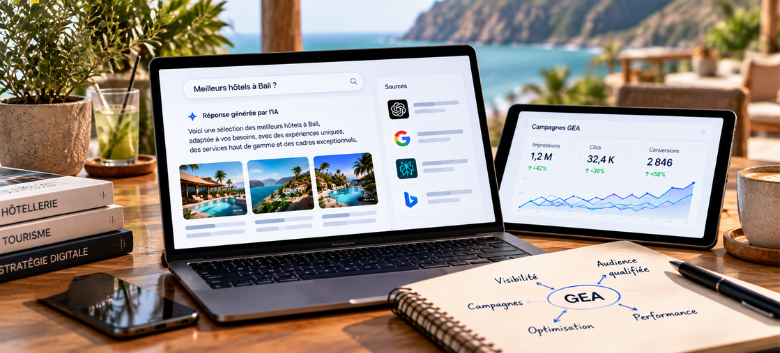
Le GEA, ou Gestion des Entreprises et des Administrations, est une formation destinée aux étudiants qui souhaitent comprendre le fonctionnement d’une organisation dans sa globalité. Gestion, comptabilité, finance, ressources humaines ou management : le cursus permet de développer des compétences polyvalentes avant de progressivement se spécialiser.
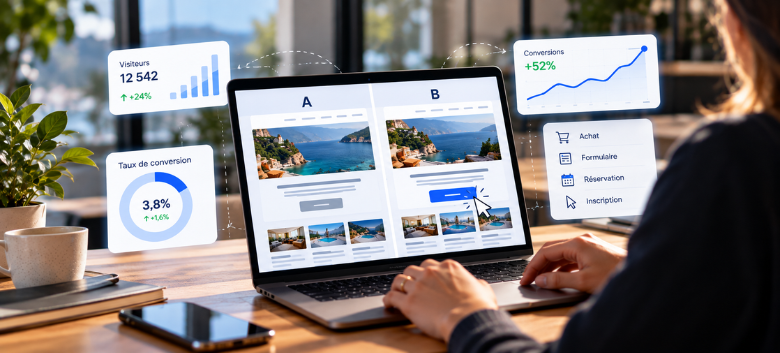
Attirer des visiteurs sur un site internet ne suffit pas : encore faut-il réussir à les transformer en clients, prospects ou utilisateurs actifs. C’est précisément l’objectif du CRO (Conversion Rate Optimization). Cette démarche consiste à analyser et optimiser un parcours digital afin d’augmenter le nombre de visiteurs réalisant une action importante pour l’entreprise.

Créer un site internet, développer une application ou automatiser des tâches sans savoir coder : c’est précisément ce que permet le No-Code. Grâce à des interfaces visuelles et des outils de plus en plus accessibles, il devient possible de concevoir des solutions digitales sans maîtriser un langage de programmation. Mais comment fonctionne réellement le No-Code et jusqu’où peut-on aller avec ces technologies ?

Le BUT GACO (Gestion Administrative et Commerciale des Organisations) est une formation polyvalente qui associe gestion, commerce, marketing, management et gestion de projet. Après l’obtention de ce Bac+3, plusieurs possibilités s’offrent aux diplômés : poursuivre vers un Bac+5, se spécialiser ou entrer directement dans la vie active. Alors, que faire après un BUT GACO ? Voici les principales orientations possibles.
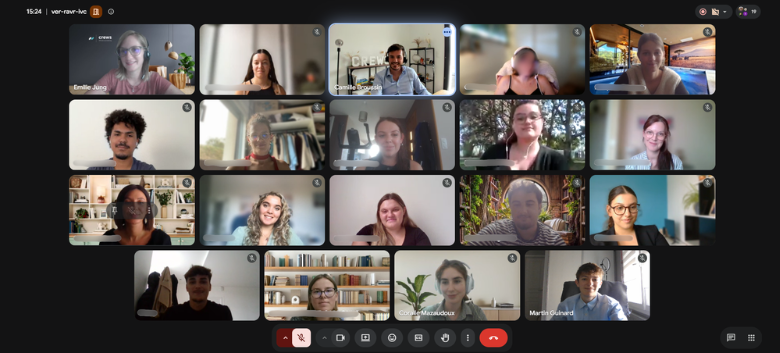
C’est reparti chez Crews ! La rentrée 2026-2027 marque le début d’une nouvelle année pour nos étudiants de Bachelor et Mastère. Entre découverte des promotions, reprise des cours, alternance et lancement des premiers projets, trois journées de rentrée ont rythmé ce mois de septembre.

Le Bachelor Marketing Digital permet d’acquérir en trois ans des compétences en communication, acquisition, réseaux sociaux, création de contenus, stratégie digitale ou encore analyse de données. Une fois le Bac+3 obtenu, plusieurs possibilités s’offrent aux diplômés : poursuivre vers un Bac+5, se spécialiser davantage ou intégrer directement le marché du travail. Alors, que faire après un Bachelor Marketing Digital ? Voici les principales orientations possibles.

Le Bachelor RET (Responsable d'Établissement Touristique) permet d'acquérir une vision complète de la gestion d'une structure touristique et d'obtenir un niveau Bac+3. Une fois diplômé, plusieurs possibilités s'offrent aux étudiants : poursuivre vers un Bac+5, se spécialiser davantage ou entrer directement dans la vie active. Alors, que faire après un Bachelor RET ? Tour d'horizon des différentes orientations possibles.

Le BUT GEA (Gestion des Entreprises et des Administrations) offre une formation polyvalente en gestion, management, finance, ressources humaines et pilotage d’entreprise. Après trois années d’études et l’obtention d’un Bac+3, plusieurs possibilités s’offrent aux diplômés : poursuivre vers un Bac+5, se spécialiser ou entrer directement dans la vie active. Alors, que faire après un BUT GEA ? Voici les principales orientations possibles.

Le BTS SAM (Support à l'Action Managériale) forme des professionnels capables d'accompagner les managers dans leurs missions quotidiennes. Gestion administrative, communication, coordination de projets, organisation d'événements ou encore gestion des relations internes et externes : ce diplôme offre une grande polyvalence.
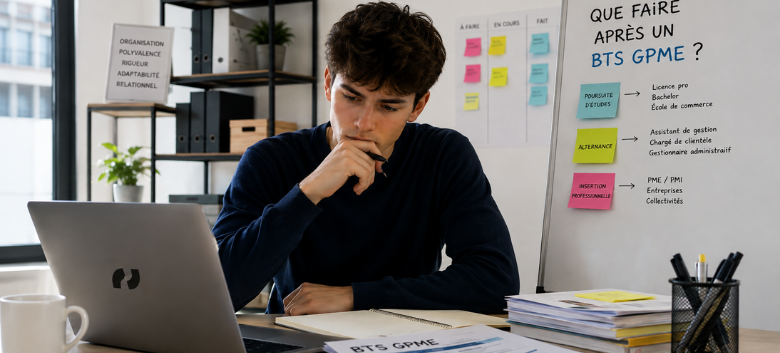
Le BTS GPME (Gestion de la PME / Petites Moyennes Entreprises) forme des professionnels polyvalents capables d'accompagner le fonctionnement quotidien d'une petite ou moyenne entreprise. Gestion administrative, comptabilité, ressources humaines, relation client ou encore organisation interne : les compétences acquises ouvrent de nombreuses perspectives.

Le BTS MCO (Management Commercial Opérationnel) ouvre les portes de nombreux métiers dans le commerce, le management et la relation client. Mais pour beaucoup d'étudiants, il constitue aussi une étape vers des études plus longues. Alors, que faire après un BTS MCO ? Poursuivre en Bachelor, intégrer directement le monde professionnel ou viser un Bac+5 ? Voici les principales possibilités qui s'offrent à vous.

Poursuivre des études supérieures représente un investissement important. Frais de scolarité, logement, transport, alimentation ou matériel informatique peuvent rapidement peser sur le budget des étudiants. Heureusement, de nombreuses aides financières existent pour alléger ces dépenses. Tour d'horizon des principaux dispositifs accessibles aux étudiants.

Le secteur de la restauration a profondément évolué ces dernières années. Les attentes des clients changent, les habitudes de consommation se digitalisent et les restaurateurs doivent aujourd'hui jongler entre gestion opérationnelle, communication, fidélisation et rentabilité. Pour répondre à ces nouveaux défis, les outils digitaux sont devenus de véritables alliés. Ils permettent non seulement de gagner du temps, mais aussi d'améliorer l'expérience client, d'optimiser les coûts et de développer le chiffre d'affaires. Quels sont les outils les plus utiles en 2026 ? Voici les principales catégories de solutions à connaître.
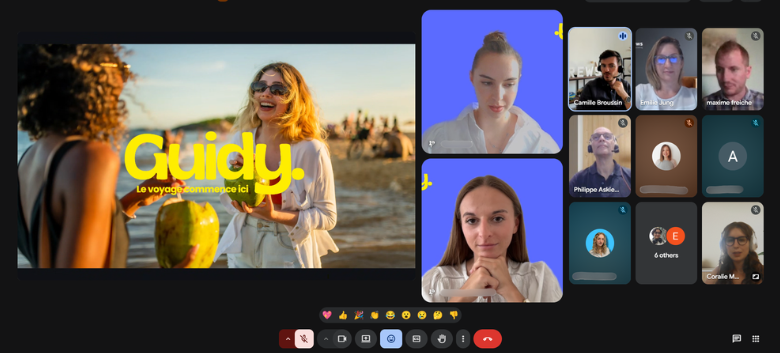
La fin d'année marque un temps fort chez Crews. Après plusieurs mois de travail, nos étudiants de Bachelor 3, Mastère 1 et Mastère 2 ont présenté leurs projets de fin d'année devant des jurys de professionnels. Ces soutenances, véritables mises en situation, leur ont permis de démontrer les compétences acquises tout au long de leur formation. Retour sur ces trois projets qui ont rythmé la fin de leur parcours académique.

Dans un secteur où les comportements des voyageurs évoluent constamment et où les canaux digitaux occupent une place centrale dans le parcours client, cette formation avait pour objectif de permettre aux équipes de renforcer leurs compétences stratégiques et d'identifier les leviers digitaux les plus pertinents pour développer leur visibilité, leur attractivité et leur performance commerciale.

Crews a accompagné les équipes d'Evian Resort dans le cadre de deux formations dédiées au GEO (Generative Engine Optimization), à l'intelligence artificielle et à la création de contenus. Dans un contexte où les moteurs de recherche évoluent rapidement et où les usages liés à l'IA générative se développent à grande vitesse, cette formation avait pour objectif de permettre aux équipes marketing de mieux comprendre les nouvelles règles de la visibilité digitale et d'identifier des applications concrètes pour leurs contenus et leurs stratégies d'acquisition.

Le tourisme est l’un des secteurs les plus concurrentiels sur les moteurs de recherche. Hôtels, agences de voyages, offices de tourisme, destinations, comparateurs, plateformes de réservation, blogs spécialisés... tous cherchent à capter l’attention des voyageurs au même moment : lorsqu’ils s’informent, comparent, planifient ou réservent.Dans ce contexte, le SEO joue un rôle essentiel. Il permet aux acteurs du tourisme d’être visibles au bon moment, sur les bonnes requêtes, avec les bons contenus. Mais le référencement naturel appliqué au tourisme possède ses propres particularités. Il ne s’agit pas seulement de “bien se positionner sur Google”, mais de comprendre les intentions de recherche des voyageurs, la saisonnalité, la concurrence locale et les parcours de décision souvent longs.

Le marché du travail évolue à une vitesse impressionnante. Intelligence artificielle, automatisation, cybersécurité, transition écologique ou encore transformation digitale : les entreprises recherchent aujourd’hui des profils capables de comprendre ces mutations et surtout de s’y adapter rapidement.Dans ce contexte, les formations évoluent elles aussi. Les cursus les plus recherchés ne sont plus uniquement ceux qui délivrent des connaissances théoriques, mais ceux qui permettent de développer des compétences concrètes, directement applicables en entreprise.En 2026, certaines formations se démarquent clairement par leur potentiel d’employabilité, leur dimension stratégique et leur capacité à répondre aux nouveaux besoins des organisations. Voici les grandes tendances à suivre.
Crews a récemment accompagné les équipes marketing de Walibi Rhône-Alpes dans le cadre d’une formation professionnelle dédiée à l’intelligence artificielle et à l’automatisation. Dans un secteur où l’expérience visiteur, la communication et la réactivité sont devenues essentielles, cette formation avait un objectif clair : permettre aux équipes de mieux comprendre comment l’IA peut devenir un véritable levier de performance marketing et opérationnelle.

Le sport évolue rapidement. Porté par les nouvelles technologies, les changements de consommation et l’évolution des attentes des pratiquants, le secteur connaît une transformation profonde. En 2026, le sport ne se limite plus uniquement à la performance ou à la compétition. Il devient plus connecté, plus expérientiel, plus hybride et plus centré sur le bien-être global. Quelles sont donc les grandes tendances qui vont marquer le sport en 2026 ? Voici les évolutions à surveiller de près.
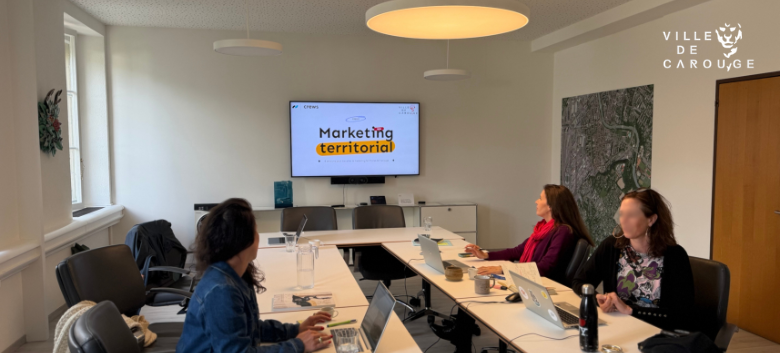
Crews a accompagné les équipes de la Ville de Carouge, en Suisse, dans le cadre d’une formation professionnelle en présentiel dédiée au marketing territorial. Cette formation avait un objectif clair : permettre aux collaborateurs de mieux comprendre les enjeux de valorisation d’un territoire et de structurer une stratégie de communication cohérente, attractive et différenciante.
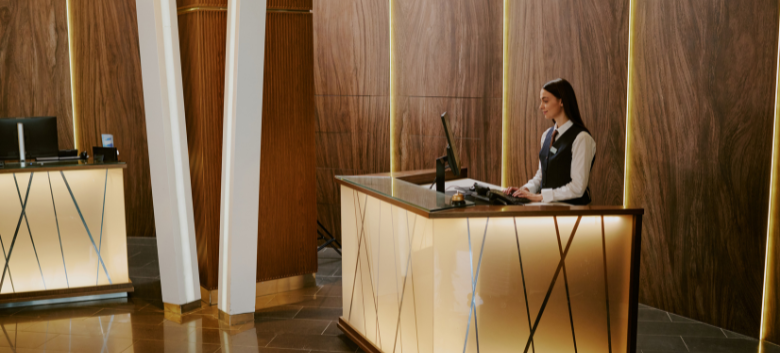
L’automatisation est en train de transformer en profondeur le secteur de l’hôtellerie. Face à des clients de plus en plus exigeants et à des équipes souvent sous pression, les établissements doivent trouver des moyens d’optimiser leurs opérations tout en maintenant un haut niveau de service. Mais automatiser ne signifie pas tout robotiser. L’enjeu est ailleurs : gagner en efficacité sans déshumaniser l’expérience. Quelles sont donc les meilleures pratiques pour intégrer intelligemment l’automatisation dans un hôtel ?

Crews a accompagné les équipes du Louvre Hotels Group, acteur majeur de l’hôtellerie internationale, dans le cadre d’une formation dédiée à l’intelligence artificielle appliquée à l’hôtellerie. L’objectif de cette formation était clair : permettre aux collaborateurs de mieux comprendre les enjeux de l’IA et surtout d’identifier des usages concrets pour optimiser leurs opérations, leur communication et l’expérience client.

Voyager moins, mais mieux. Prendre le temps, plutôt que cocher des cases. Depuis quelques années, une nouvelle manière de voyager s’impose : le slow tourisme. Face au tourisme de masse et à l’accélération des modes de vie, cette approche séduit de plus en plus de voyageurs en quête de sens, d’authenticité et de respect de l’environnement. Mais concrètement, qu’est-ce que le slow tourisme ? Et pourquoi s’impose-t-il comme une tendance majeure du secteur ?

Pendant des années, la visibilité digitale a été dominée par une logique simple : apparaître sur Google. Le SEO était le pilier central de toute stratégie d’acquisition. Mais ce modèle est aujourd’hui en train d’évoluer en profondeur. Les usages changent, les plateformes se multiplient, et surtout, l’intelligence artificielle transforme la manière dont les utilisateurs accèdent à l’information. Dans ce contexte, une nouvelle approche émerge : le Global Search Optimization (GSO). Plus qu’une tendance, le GSO représente une évolution structurelle de la visibilité digitale.

Recevez nos dernières actualités et les dates de nos prochains événements