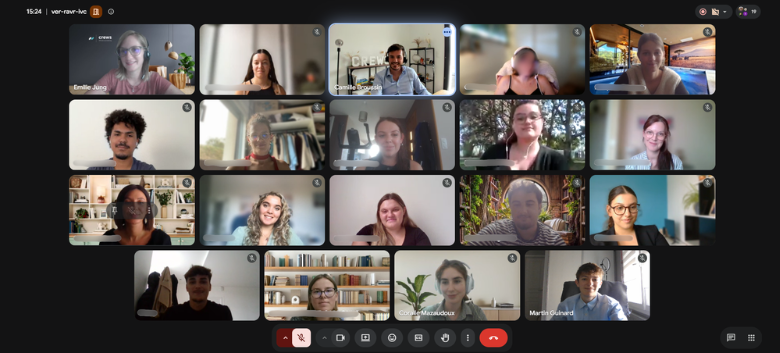
En octobre, Crews s’engage activement aux côtés de la Ligue contre le Cancer #CrewsEnRose

👉 En savoir plus


L'e-tourisme, ou tourisme en ligne, s'est imposé comme un secteur dynamique qui redéfinit la manière dont nous planifions, réservons et vivons nos voyages. Avec l'évolution rapide des technologies numériques, les débouchés dans l'e-tourisme sont plus prometteurs que jamais. Explorez avec nous les opportunités de carrière passionnantes qu’offre ce secteur en plein essor.
Ces créateurs de contenus sont des artistes de la communication, utilisant les médias sociaux, les blogs et les plateformes vidéo pour inspirer et informer. Ils bâtissent des communautés engagées, connectant des esprits curieux avec des horizons inexplorés.
À travers des collaborations créatives, des rencontres avec des cultures diverses et des aventures audacieuses, le créateur de contenus Travel forge un lien unique entre le rêve et la réalité.
Le responsable marketing digital est un professionnel chargé de planifier, mettre en œuvre et superviser les stratégies de marketing en ligne d'un acteur du tourisme. Son rôle inclut la gestion des campagnes publicitaires en ligne, l'optimisation du référencement, la coordination des réseaux sociaux, et l'analyse des performances digitales.
En résumé, il veille à maximiser la visibilité et la performance de l'entreprise sur les plateformes digitales.
Le chef de projet e-tourisme est un professionnel spécialisé dans la gestion de projets liés au tourisme en ligne. Son rôle consiste à concevoir, coordonner et mettre en œuvre des initiatives numériques visant à promouvoir des destinations touristiques. Cela inclut souvent le développement de sites web touristiques, la gestion de plateformes de réservation en ligne, la mise en place de campagnes de marketing digital spécifiques au secteur du tourisme, et l'utilisation de technologies innovantes pour améliorer l'expérience des voyageurs en ligne.
Il œuvre à maximiser la présence en ligne et l'attrait des destinations touristiques.
Le chef de produit touristique est un professionnel chargé de la conception, du développement et de la gestion de produits touristiques. Son rôle englobe la création et l'amélioration de forfaits touristiques attractifs en fonction des besoins du marché. Cela inclut la sélection d'activités, d'hébergements, de transports et d'expériences pour créer des offres complètes et séduisantes. Le chef de produit touristique collabore souvent avec divers partenaires tels que les hôtels, les agences de voyage et les prestataires d'activités pour garantir la qualité et la diversité des produits proposés.
Il s'efforce donc d'offrir des expériences touristiques mémorables et compétitives sur le marché.
Le chargé d’expérience client touristique est un professionnel spécialisé dans la gestion et l'amélioration de l'expérience globale des clients pour un acteur du tourisme. Son rôle consiste à comprendre les besoins, les attentes et les préférences des clients afin d'optimiser leur parcours et de renforcer la satisfaction. Cela implique souvent la collecte de feedback, l'analyse des données client, la mise en œuvre de solutions pour résoudre les problèmes et l'amélioration continue des processus pour garantir une expérience client exceptionnelle.
Le chargé d’expérience client travaille à créer des interactions positives et mémorables entre les clients et l'entreprise.
Le responsable de l’innovation touristique est un professionnel chargé de stimuler et de superviser le développement d'initiatives novatrices dans le secteur du tourisme. Son rôle consiste à identifier les opportunités émergentes, à explorer de nouvelles technologies, et à concevoir des solutions créatives pour améliorer l'expérience touristique. Cela peut englober la mise en œuvre de technologies émergentes telles que la réalité virtuelle, l'intelligence artificielle, ou des plateformes disruptives de réservation.
En résumé, le responsable de l’innovation touristique œuvre à maintenir le secteur du tourisme à la pointe en intégrant des idées nouvelles et des approches innovantes pour répondre aux attentes changeantes des voyageurs.
Le consultant en marketing du tourisme est un professionnel spécialisé dans la prestation de conseils et de services en matière de marketing pour les entreprises opérant dans le secteur du tourisme. Son rôle consiste à analyser les tendances du marché, à évaluer la concurrence, et à développer des stratégies de marketing efficaces pour attirer et fidéliser les clients. Cela peut englober la planification de campagnes publicitaires, la gestion de la présence en ligne, la création de contenu engageant, et la coordination d'initiatives promotionnelles spécifiques au secteur touristique. Il apporte son expertise pour aider les entreprises du tourisme à atteindre leurs objectifs marketing et à se démarquer dans un marché concurrentiel.
Ce métier peut s'exercer dans une agence de communication, dans un cabinet de conseil ou en indépendant.
Il est aussi possible d’entreprendre dans le tourisme numérique en créant et en dirigeant une entreprise axée sur l’utilisation de technologies numériques pour améliorer l’industrie du tourisme. Cela passe par la conception et la mise en œuvre de solutions innovantes telles que des applications mobiles, des plateformes de réservation en ligne, des expériences virtuelles, et d'autres outils numériques destinés à enrichir l'expérience touristique.
Un entrepreneur dans le tourisme numérique peut par ailleurs travailler sur l’utilisation de technologies émergentes telles que la réalité virtuelle, la réalité augmentée, la blockchain et l’intelligence artificielle.
Pour vous former au e-tourisme, il est possible de se former avec des formations au marketing du tourisme allant de Bac+3 à Bac+5 :
Crews a également développé des formations tourisme en ligne proposées sur des points très précis pour acquérir les compétences qu’il vous manque :
L'e-tourisme ouvre la voie à une variété de débouchés passionnants, où les professionnels peuvent contribuer à façonner l'avenir du voyage. Que ce soit dans la technologie, le marketing, le numérique ou l'innovation, les opportunités de carrière dans l'e-tourisme sont aussi vastes et diversifiées que le monde qu'il nous invite à explorer. On peut d’ailleurs facilement parier sur l’évolution continuelle et grandissante de ces métiers dans l’avenir. Embarquez pour une aventure professionnelle stimulante au cœur de l'e-tourisme !


.png)