En octobre, Crews s’engage activement aux côtés de la Ligue contre le Cancer #CrewsEnRose

👉 En savoir plus


Dans le monde en constante évolution d'aujourd'hui, le remote learning, ou l'apprentissage en ligne synchrone offre une multitude d'avantages, transformant radicalement la manière dont nous acquérons de nouvelles compétences et connaissances. Cet article explore les avantages clés de la formation à distance et en live, et met en lumière pourquoi cette approche devient de plus en plus populaire.
L'un des principaux avantages du remote learning est la flexibilité qu'il offre aux apprenants. La possibilité de participer à des cours de n'importe où dans le monde élimine les contraintes géographiques. Sur des domaines spécialisés comme le digital et les nouvelles technologies, il est notamment parfois difficile de trouver une école ou un organisme de formation proche de chez soi.
Il est tout à fait possible pour un apprenant d’être mobile durant les jours de formation, puisqu’il suffit d’une simple connexion internet. Cela induit de pouvoir participer aux cours depuis sa maison familiale, d’un espace de coworking, ou même depuis son lieu de vacances.
Par ailleurs, dans le cas des formations étudiantes en alternance, la recherche d’une entreprise pour réaliser son apprentissage n’est donc soumise à aucune contrainte géographique. L’étudiant peut donc élargir ses critères de recherche et maximiser ses chances de trouver une alternance.
Crews prône cette mobilité géographique et propose ainsi des formations aux métiers du digital qui permettent d’être où vous le souhaitez quand vous le voulez. En voici quelques unes :
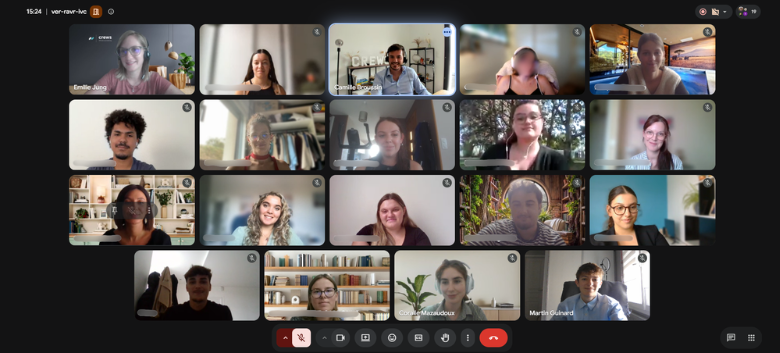
Contrairement à l'apprentissage asynchrone, où les apprenants travaillent de manière indépendante, l'apprentissage synchrone permet une interaction en temps réel. Les participants peuvent poser des questions, partager des idées et collaborer avec les intervenants et les autres apprenants, créant ainsi un environnement d'apprentissage plus dynamique, plus qualitatif et plus engageant.
Les formations synchrones offrent une occasion précieuse d'obtenir un encadrement personnalisé de la part des intervenants. Les étudiants peuvent obtenir des réponses immédiates à leurs questions et bénéficier d'une attention individualisée, favorisant ainsi une compréhension approfondie des sujets abordés. Les plateformes d'apprentissage en ligne synchrone offrent également des fonctionnalités de suivi en temps réel et de l’engagement de l’apprenant, notamment grâce à des outils adaptés : cela est un moyen unique pour personnaliser l’expérience d’apprentissage à chaque étudiant.
Bien que les cours soient en distanciel, il est possible de créer du lien en présentiel de manière ponctuelle avec l'organisation de séminaires. C’est ce que propose Crews a raison de deux fois par année d’études dont le premier se réalise au début du parcours afin que les étudiants se rencontrent et apprennent à se connaître. C’est également un moyen plus informel de travailler ensemble. Pour l’année 2023-2024, le séminaire d’onboarding s’est tenu à Paris.
Le remote learning tire parti des nouvelles technologies telles que les salles de classe virtuelles, les tableaux blancs interactifs et les outils de collaboration en ligne. Cela crée une expérience immersive qui va au-delà des simples vidéos préenregistrées ou des documents PDF à rallonge, offrant aux apprenants une expérience éducative enrichissante et dynamique.
Il est également possible pour les apprenants d’avoir accès au replay des cours, ce qui facilite l’apprentissage une fois que le cours est terminé.
Une étude d’Euro Car Parts indique qu’un travailleur français passe en moyenne 3h30 par semaine dans les trajets pendulaires, c’est-à-dire les trajets effectués tous les jours entre le domicile et le lieu de travail ou de formation, tous modes confondus (soit 7 820 heures de sa vie).*
De plus, les trajets domicile-travail de plus de 60 minutes multiplient le risque de dépression d’1,16 selon une étude sur les coréens**. Cela est dû au fait que ces personnes ont moins de temps libre pour réduire le stress quotidien.
Le remote learning supprime ces trajets pendulaires, faisant gagner un temps précieux chaque jour et réduisant par ailleurs notre empreinte carbone. La suppression de ces trajets permet également une réduction considérable des coûts liés à ces trajets, que ce soit avec son véhicule personnel ou par transport en commun puisqu’il n’y a aucune contrainte géographique.
L’aspect psychologique est évidemment à prendre en compte puisqu’un meilleur équilibre professionnel/personnel apparaît grâce à l’élimination des temps de trajet dans le quotidien des apprenants.
En conclusion, l'apprentissage en ligne synchrone représente une révolution dans la manière d’apprendre, offrant des avantages tangibles aux apprenants du monde entier. La combinaison de flexibilité, d'interaction en temps réel, de technologies innovantes, d’économie de temps et d’argent et de réduction d’empreinte carbone en fait une option adaptée aux besoins contemporains tout en gardant la qualité d’apprentissage. Avec l'évolution rapide de la technologie, le remote learning continuera de façonner l'avenir de l'éducation.
**https://trustmyscience.com/depression-influence-trajets-domicile-travail/


.png)