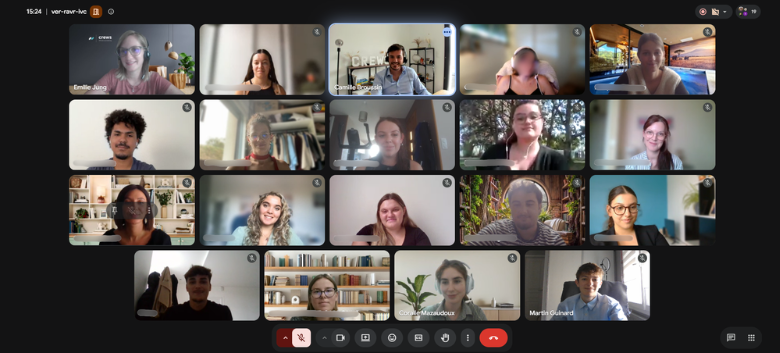
En octobre, Crews s’engage activement aux côtés de la Ligue contre le Cancer #CrewsEnRose

👉 En savoir plus


En 2025, l'innovation digitale continue de transformer les entreprises et leurs modèles économiques. De l'essor de l'intelligence artificielle aux nouvelles pratiques marketing, il est crucial pour les organisations d'anticiper ces évolutions pour rester compétitives. Découvrez les principales tendances digitales à surveiller et comment elles impactent les secteurs du tourisme, de l'hôtellerie et du luxe.
L'IA n'est plus une simple tendance : elle devient un levier stratégique majeur. Les entreprises adoptent des outils d'IA générative pour créer du contenu personnalisé à grande échelle, automatiser les tâches répétitives et améliorer la prise de décision grâce à l'analyse prédictive.
D’ici 2025, 75 % des entreprises utiliseront des outils d'IA pour automatiser leurs processus et améliorer l'expérience client. Selon une étude de PwC, l'IA pourrait contribuer à hauteur de 15,7 billions de dollars à l'économie mondiale d'ici 2030, dont une large part issue des gains de productivité et de l'automatisation.
Les données sont devenues l'or noir du 21ᵉ siècle. En 2025, l'analyse prédictive jouera un rôle fondamental dans les décisions stratégiques. Une étude de McKinsey révèle que les entreprises exploitant les données analytiques obtiennent des performances 23 fois plus élevées en matière d'acquisition de clients et 19 fois plus en termes de rentabilité, avec un taux de conversion qui augmente de 20 % en moyenne.
L'analytique prédictive permet d'anticiper les comportements des consommateurs, d'optimiser les campagnes marketing et d'améliorer la gestion des ressources. Dans l'industrie hôtelière, elle peut prédire les périodes de forte affluence, ajuster les prix en temps réel et personnaliser les services pour fidéliser la clientèle.
En 2025, l'automatisation du marketing et l'hyper-personnalisation seront devenues des standards. Grâce aux progrès de l'IA et du machine learning, il est possible de segmenter les audiences de manière plus précise et de délivrer des messages sur-mesure en temps réel. D'après Statista, 89 % des spécialistes du marketing déclarent que la personnalisation améliore leur performance commerciale.
Les entreprises adoptent des outils de marketing automation pour automatiser les campagnes e-mail, les publicités ciblées et le nurturing client, réduisant ainsi le temps consacré aux tâches répétitives tout en augmentant le taux de conversion. Cette approche est particulièrement efficace dans des secteurs comme le tourisme et l'hôtellerie, où l'expérience client est un facteur différenciant clé.
Le commerce conversationnel repose sur l'utilisation de la messagerie instantanée, des chatbots et des assistants vocaux pour accompagner les clients tout au long de leur parcours d'achat. Selon Juniper Research, les transactions réalisées via des chatbots dépasseront les 142 milliards de dollars d'ici 2025.
Les entreprises investissent massivement dans ces solutions pour offrir un service client 24/7, réduire les délais de réponse et améliorer la satisfaction client. Dans le secteur de l'hôtellerie, les chatbots peuvent gérer les réservations, répondre aux questions fréquentes et fournir des recommandations personnalisées en quelques secondes.
La durabilité numérique est un enjeu majeur pour 2025. Les entreprises sont de plus en plus tenues de réduire leur empreinte carbone numérique. Selon un rapport de l'ADEME, les technologies numériques représentent 4 % des émissions mondiales de gaz à effet de serre, et ce chiffre pourrait doubler d'ici 2025 sans action concrète.
Les initiatives incluent l'optimisation de la consommation énergétique des serveurs, la réduction des e-mails inutiles et l'adoption de pratiques numériques écoresponsables. Pour les entreprises, cela se traduit par des solutions digitales plus respectueuses de l'environnement, telles que la dématérialisation des processus et l'optimisation des ressources numériques.
Les tendances digitales de 2025 façonneront durablement la manière dont les entreprises opèrent et interagissent avec leurs clients. Pour rester compétitif, il est essentiel de comprendre ces évolutions et d'investir dans la montée en compétences.
Avec Crews, formez-vous aux métiers d'avenir et maîtrisez les outils numériques indispensables, en découvrant nos formations professionnelles, pour accompagner la transformation digitale de votre secteur.

En 2025, les principales tendances incluent l'essor de l'IA générative, le marketing prédictif, la cybersécurité renforcée, la digitalisation de l'expérience client et l'intégration du développement durable dans les stratégies numériques.
Adopter les nouvelles technologies permet d'améliorer l'efficacité opérationnelle, d'optimiser l'expérience client et de rester compétitif sur un marché en constante évolution.
Crews propose des formations professionnelles sur des thématiques clés, avec un accompagnement personnalisé pour répondre aux enjeux spécifiques des entreprises.
Les compétences en IA, en analyse de données, en cybersécurité et en stratégie digitale seront particulièrement prisées, notamment dans les secteurs du tourisme, de l'hôtellerie et du luxe.


.png)